Simplifying Complex Purchases
etrailer | Lead Product Designer
Executive Summary
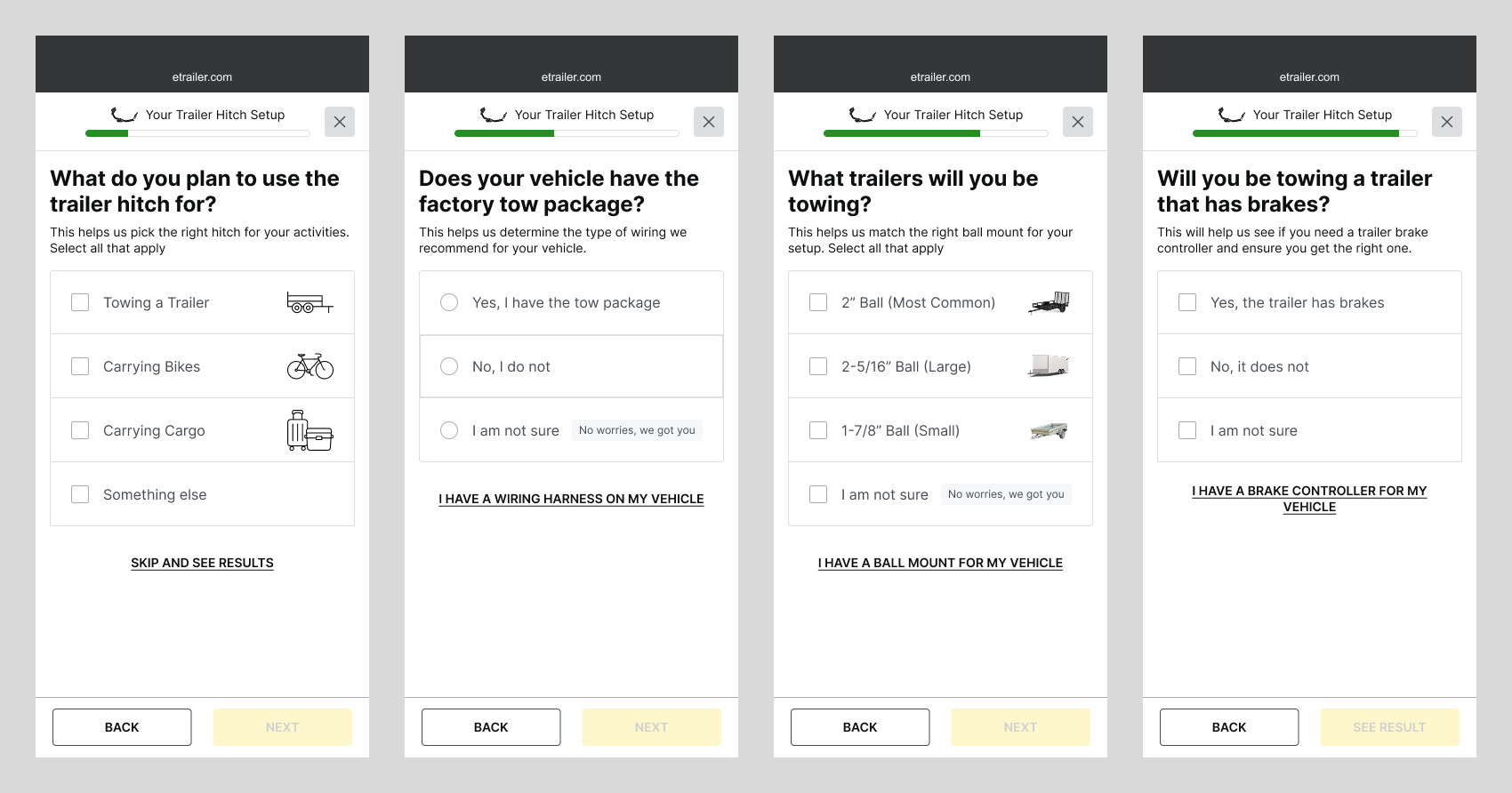
Customers shopping for towing products struggled to answer a fundamental question: do I have everything I need?
While the site contained extensive product and fitment information, it was fragmented and difficult to apply, leading to hesitation, incorrect purchases, and reliance on customer service.
I led a cross-team initiative to reframe this problem at the journey level, align multiple designers around a shared approach, and guide the development of a more cohesive, confidence-driven experience. The work is still in active experimentation, but early signals show strong engagement and meaningful learning.
The Problem
Customers weren’t struggling to find products—they were struggling to understand what they needed.
A complete towing setup requires multiple interdependent components, but the experience didn’t clearly help customers determine compatibility or completeness. Information was scattered, surfaced at the wrong time, and often too dense to support quick decisions.
As a result, customers hesitated, abandoned purchases, or turned to customer service for reassurance. Internally, the issue was compounded by a fragmented approach to design, with teams focused on isolated parts of the journey rather than the full experience.
The Process
I reframed the work from optimizing pages to reducing research friction across the journey.
To support that shift, I defined scope, timelines, and a shared methodology across the design team: identify friction points, conduct user interviews, prototype solutions, and validate through usability testing before running experiments.
As research progressed, a key insight emerged: customers do not experience consideration and selection as separate phases. In response, we merged those efforts into a unified flow. I structured collaboration across designers, helping align workstreams, clarify shared ownership, and maintain momentum across product and engineering partners.
We also extended the solution into post-purchase, recognizing that confidence doesn’t end at checkout.
Results & Learnings
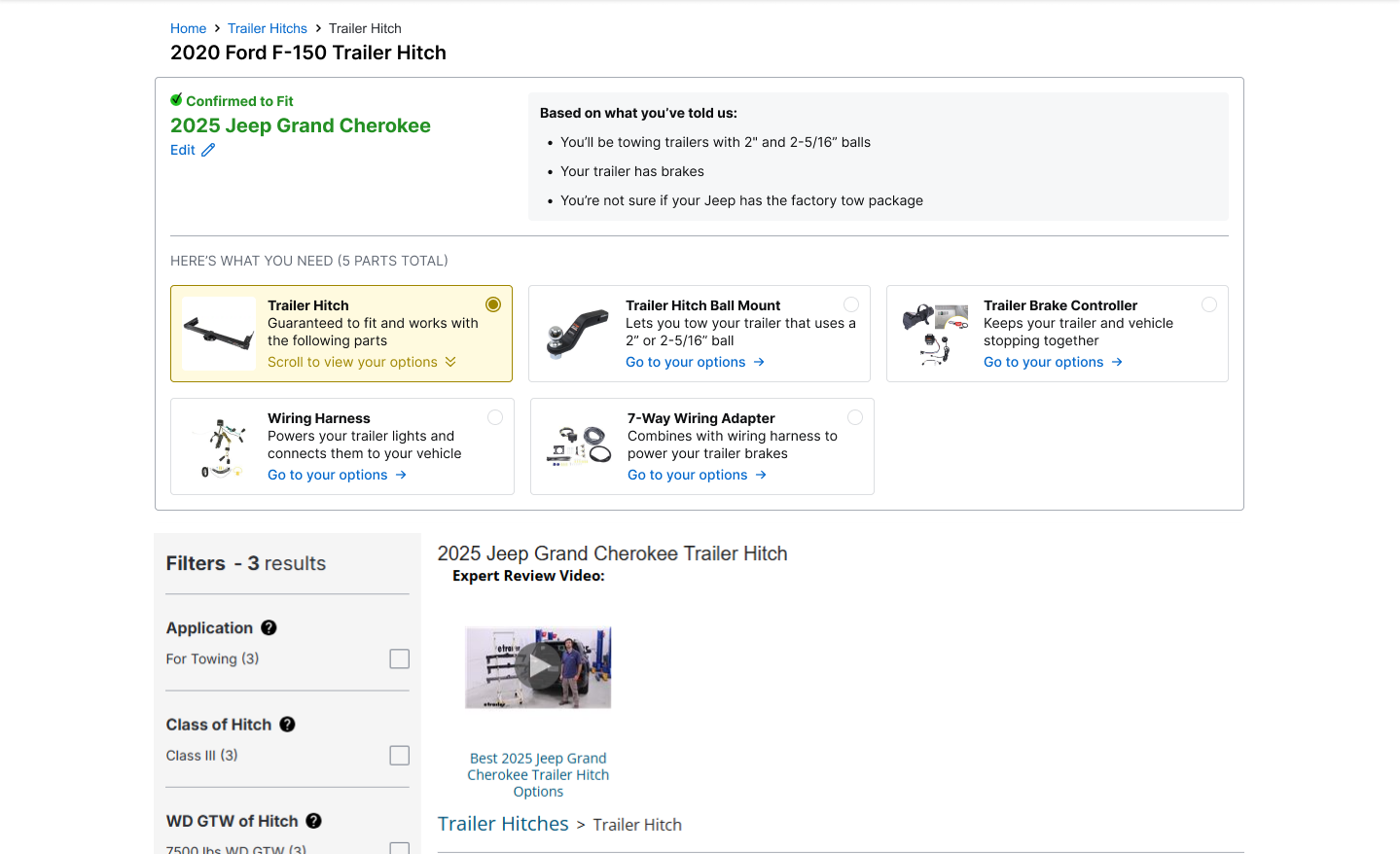
The guided flow has shown strong completion rates, indicating high engagement with structured guidance. However, conversion has remained flat, suggesting that while customers are willing to engage, decision-making may still be hindered by complexity.
We are now refining the results experience to reduce cognitive load and support clearer decision-making. Leaving it open-ended, but filtered by the submitted info still left too many complex decisions. Our next iteration will be a pre-built package selected to best suit the customers stated goals.
Usability testing on the post-purchase email showed strong positive reception, with customers clearly interpreting it as helpful rather than promotional. After some testing, the intent is to use the post-purchase experience to close the loop and help funnel customers back to a complete setup.
Internally, the initiative has driven stronger collaboration and increased focus on experience-level thinking over isolated optimizations.